Show results for
Refine results by
Notes
Fiber Mode
Product Type
Connector Type
USB Version
Data Transfer Rate
Shielding
Keystone Jacks
Shop Keystone Jacks

Networx
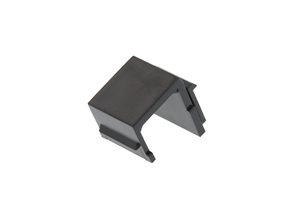
Blank Plug for Networx Wall Plate - 10 Pack - Black
Networx® Blank Plugs are great for covering up any unused ports in a keystone wall plate.
$1.80
In stock

Networx
Blank Plug for Networx Wall Plate - 10 Pack - Ivory
Networx® Blank Plugs are great for covering up any unused ports in a keystone wall plate.
$1.80
In stock
Networx
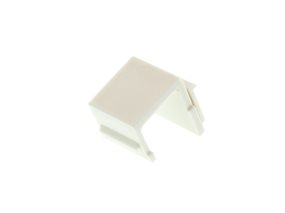
Blank Plug for Networx Wall Plate - 10 Pack - White
Networx® Blank Plugs are great for covering up any unused ports in a keystone wall plate.
$1.80
In stock

Networx
BNC 75 Ohm Feed Through Keystone Jack - Black
Networx® 75 Ohm BNC Keystone Jacks offer great performance while handling the most intensive data hungry services.
$2.43
In stock
Networx
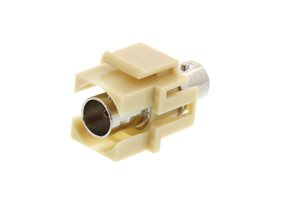
BNC 75 Ohm Feed Through Keystone Jack - Ivory
Networx® 75 Ohm BNC Keystone Jacks offer great performance while handling the most intensive data hungry services.
$2.43
In stock
Networx
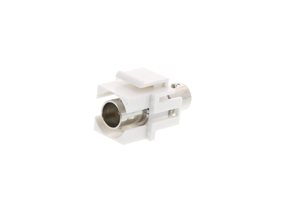
BNC 75 Ohm Feed Through Keystone Jack - White
Networx® 75 Ohm BNC Keystone Jacks offer great performance while handling the most intensive data hungry services.
$2.43
Networx
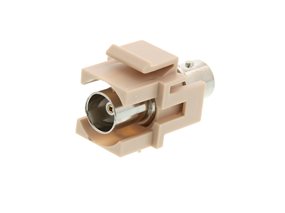
BNC Feed Through Keystone Jack - Ivory
Networx® BNC Keystone Jacks offer great performance while handling the most intensive data hungry services.
$1.57
In stock

Networx
BNC Feed Through Keystone Jack - White
Networx® BNC Keystone Jacks offer great performance while handling the most intensive data hungry services.
$1.57
In stock

Networx
Cat 6 SpeedTerm Keystone Jack 180 Degree 110 UTP - Red
Put these versatile keystone jacks to work! They are compatible with your standard 110 Punch Down Tool as well as the SpeedTerm Tool available from Networx®.
$2.43
In stock

Networx
Cat 6 SpeedTerm Keystone Jack 90 Degree 110 UTP - Beige
Put these versatile keystone jacks to work! They are compatible with your standard 110 Punch Down Tool as well as the SpeedTerm Tool available from Networx®.
$2.17
In stock
Networx
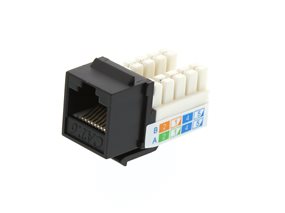
Cat 6 SpeedTerm Keystone Jack 90 Degree 110 UTP - Black
Put these versatile keystone jacks to work! They are compatible with your standard 110 Punch Down Tool as well as the SpeedTerm Tool available from Networx®.
$2.64
In stock
Networx
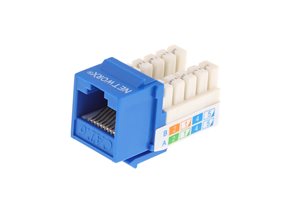
Cat 6 SpeedTerm Keystone Jack 90 Degree 110 UTP - Blue
Put these versatile keystone jacks to work! They are compatible with your standard 110 Punch Down Tool as well as the SpeedTerm Tool available from Networx®.
$2.64
In stock
Networx
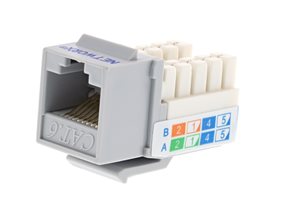
Cat 6 SpeedTerm Keystone Jack 90 Degree 110 UTP - Gray
Put these versatile keystone jacks to work! They are compatible with your standard 110 Punch Down Tool as well as the SpeedTerm Tool available from Networx®.
$2.64
In stock
Networx
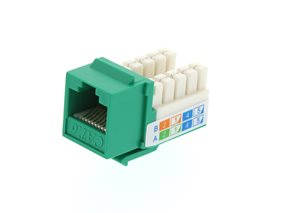
Cat 6 SpeedTerm Keystone Jack 90 Degree 110 UTP - Green
Put these versatile keystone jacks to work! They are compatible with your standard 110 Punch Down Tool as well as the SpeedTerm Tool available from Networx®.
$2.64
In stock
Networx
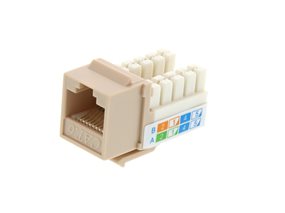
Cat 6 SpeedTerm Keystone Jack 90 Degree 110 UTP - Ivory
Put these versatile keystone jacks to work! They are compatible with your standard 110 Punch Down Tool as well as the SpeedTerm Tool available from Networx®.
$2.64
In stock
Networx
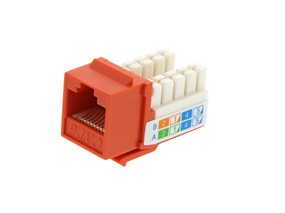
Cat 6 SpeedTerm Keystone Jack 90 Degree 110 UTP - Orange
Put these versatile keystone jacks to work! They are compatible with your standard 110 Punch Down Tool as well as the SpeedTerm Tool available from Networx®.
$2.64
In stock
Networx
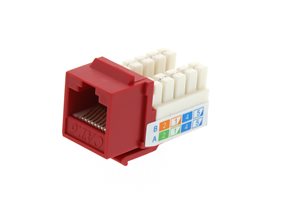
Cat 6 SpeedTerm Keystone Jack 90 Degree 110 UTP - Red
Put these versatile keystone jacks to work! They are compatible with your standard 110 Punch Down Tool as well as the SpeedTerm Tool available from Networx®.
$2.64
In stock
Networx
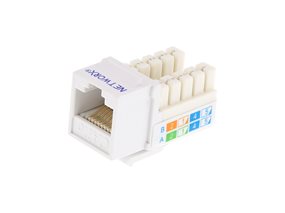
Cat 6 SpeedTerm Keystone Jack 90 Degree 110 UTP - White
Put these versatile keystone jacks to work! They are compatible with your standard 110 Punch Down Tool as well as the SpeedTerm Tool available from Networx®.
$2.64
In stock
Networx
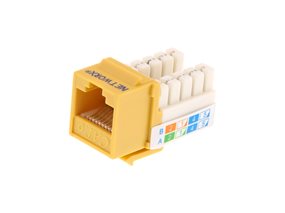
Cat 6 SpeedTerm Keystone Jack 90 Degree 110 UTP - Yellow
Put these versatile keystone jacks to work! They are compatible with your standard 110 Punch Down Tool as well as the SpeedTerm Tool available from Networx®.
$2.64
In stock
Limited Availability
Networx
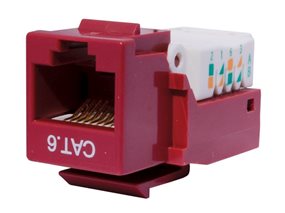
Cat 6 Tool-less Keystone Jack 90 Degree 110 UTP - Red
CAT6 Tool-less Keystone Jacks from Networx® provide the ultimate performance at a competitive price. These Category 6 Tool-less Keystone Jacks are 8-Position 8-Conductor (8P8C) and will live up to your expectations time and time again.
$1.32
6% off
$1.24
In stock

Networx
Cat 6A Shielded Panel Mount Keystone Coupler
CAT6A Shielded Panel Mount Keystone Couplers from Networx® provide the ultimate performance at a competitive price. These Category 6A Shielded Panel Mount Keystone Couplers are 8-Position 8-Conductor (8P8C) and will live up to your expectations time and time again.
$3.97
In stock
Networx
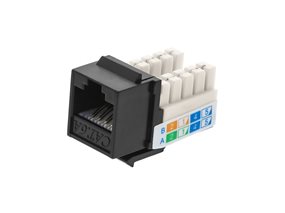
Cat 6A SpeedTerm Keystone Jack 90 Degree - Black
Put these versatile keystone jacks to work! They are compatible with your standard 110 Punch Down Tool as well as the SpeedTerm Tool available from Networx®.
$3.13
In stock
Networx
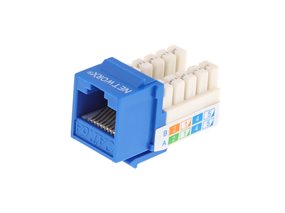
Cat 6A SpeedTerm Keystone Jack 90 Degree - Blue
Put these versatile keystone jacks to work! They are compatible with your standard 110 Punch Down Tool as well as the SpeedTerm Tool available from Networx®.
$3.13
In stock

Networx
Cat 6A SpeedTerm Keystone Jack 90 Degree - Shielded
Put these versatile keystone jacks to work! They are compatible with your standard 110 Punch Down Tool as well as the SpeedTerm Tool available from Networx®.
$4.47
In stock
Frequently asked questions
What is a keystone jack?
A keystone jack is a standardized modular connector that snaps into a keystone-cut wall plate, patch panel, or surface mount box. It lets you mix and match different connector types (network, coax, fiber, HDMI, USB, and more) in the same wall plate or panel opening.
Was this helpful?
Thanks for your feedback.
What's the difference between a keystone jack and a regular wall jack?
A regular wall jack is usually a fixed, single-purpose connector built into a plate. A keystone jack is a separate modular component that snaps into any keystone-cut opening, so the same wall plate or patch panel can be configured with whatever mix of connector types a job needs.
Was this helpful?
Thanks for your feedback.
What's the difference between punch-down, tool-less, and SpeedTerm termination on a keystone jack?
Punch-down (110-type) termination uses a punch-down tool to press each conductor into a slotted connector one at a time. Tool-less termination uses a latch or lever mechanism to terminate the wire by hand, without any tool. SpeedTerm is Networx's branded one-motion termination system for its Cat6 and Cat6A keystone jacks — it still uses a tool (either a standard 110 punch-down tool or the dedicated SpeedTerm tool), but the SpeedTerm tool seats all conductors in a single motion instead of punching them down individually.
Was this helpful?
Thanks for your feedback.
Do keystone jacks work with any wall plate or patch panel?
Virtually all standard keystone jacks fit any standard keystone-cut wall plate, surface mount box, or keystone patch panel, since the keystone cutout size and jack housing are a common industry standard.
Was this helpful?
Thanks for your feedback.
What's the 568-B wiring standard mentioned on some of these jacks?
568-B is one of the two standard wire-color termination orders (the other is 568-A) for terminating 8-conductor network cable onto RJ45-style jacks and plugs. As long as both ends of a cable run use the same standard consistently, either works, but 568-B is the more common convention in commercial installs.
Was this helpful?
Thanks for your feedback.
Do these keystone jacks come with a warranty?
Yes, Networx keystone jacks carry a Lifetime Warranty.
Was this helpful?
Thanks for your feedback.
What does "SpeedTerm" mean on a Networx keystone jack?
SpeedTerm is Networx's one-motion termination system for Cat6 and Cat6A keystone jacks. The jacks work with a standard 110 punch-down tool, but Networx's dedicated SpeedTerm tool seats and trims all conductors in a single clamping motion instead of punching each one down individually, speeding up installation.
Was this helpful?
Thanks for your feedback.