Show results for
Refine results by
Manufacturer
Connector
Length
Bandwidth
Audio / Video
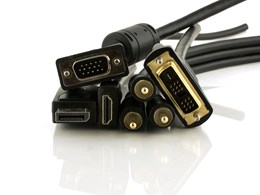
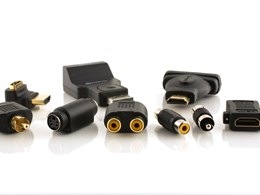
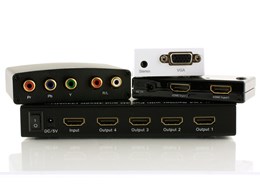
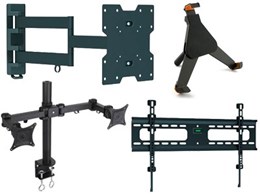
Here you'll find a wide variety of cables and devices to suit your home audio/video needs. From HDMI and DVI to HDTV Wall Mounts, you'll find everything needed to get your audio/video set up running flawlessly.
Shop Audio / Video

Networx
HD15 Female to Female Gender Changer
Networx® HD15 Female to Female Gender Changer's are an inexpensive and convenient way to adapt a pre-existing cable.
$2.42
In stock

Networx
HD15 Male to Female Gender Changer
Networx® HD15 Male to Female Gender Changer's are an inexpensive and convenient way to adapt a pre-existing cable.
$2.30
In stock

Networx
HD15 Male to Male Gender Changer
Networx® HD15 Male to Male Gender Changer's are an inexpensive and convenient way to adapt a pre-existing cable.
$2.30
Networx
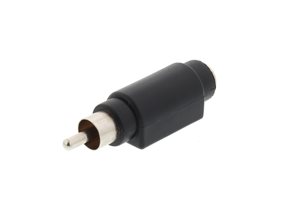
Video Adapter - S-Video Female to RCA Male
These Networx® Video Adapters provide you with the ability to convert an S-Video connection to an RCA connection or vise versa without having to buy new cables.
$2.30
In stock
Networx
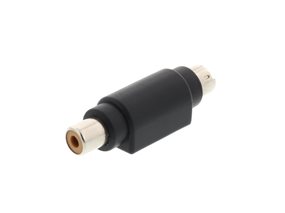
Video Adapter - S-Video Male to RCA Female
These Networx® Video Adapters provide you with the ability to convert an S-Video connection to an RCA connection or vise versa without having to buy new cables.
$1.05
In stock

Vivid AV
.5 FT Audio "Y" Splitter Cable - 3.5mm Female to Left and Right Males
Our .5 FT Audio "Y" Splitter Cable - 3.5mm Female to Left and Right Males cables provide a quality connection for your PC's sound card or portable CD player to a set of multimedia speakers.
$2.36
In stock
Vivid AV
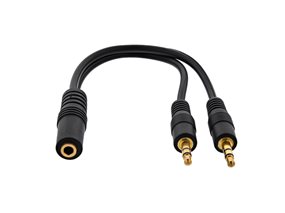
.5 FT Audio "Y" Splitter Cable - 3.5mm Female to Stereo Males
Our .5 FT Audio "Y" Splitter Cable - 3.5mm Female to Stereo Males cables provide a quality connection for your PC's sound card or portable CD player to a set of multimedia speakers.
$2.07
In stock

Vivid AV
.5 FT Audio "Y" Splitter Cable - 3.5mm Male to Dual RCA Females
Our .5 FT Audio "Y" Splitter Cable - 3.5mm Male to Dual RCA Females cables provide a quality connection for your PC's sound card or portable CD player to a set of multimedia speakers.
$2.07
In stock

Vivid AV
.5 FT Audio "Y" Splitter Cable - 3.5mm Male to Dual RCA Males
Our .5 FT Audio "Y" Splitter Cable - 3.5mm Male to Dual RCA Males cables provide a quality connection for your PC's sound card or portable CD player to a set of multimedia speakers.
$2.39

Vivid AV
.5 FT Audio "Y" Splitter Cable - 3.5mm Male to Stereo Females
Our .5 FT Audio "Y" Splitter Cable - 3.5mm Male to Stereo Females cables provide a quality connection for your PC's sound card or portable CD player to a set of multimedia speakers.
$2.07
In stock

Vivid AV
1 Meter (3.28 FT) 8K DisplayPort 2.1 Cable - 54Gbps
This 1 Meter 8K DisplayPort 2.1 Cable delivers ultra-high-definition video with support for resolutions up to 8K. Featuring a 54Gbps bandwidth, this cable ensures smooth, high-speed data transmission, making it ideal for gaming, professional graphics, and high-performance displays.
$9.97
In stock
Vivid AV
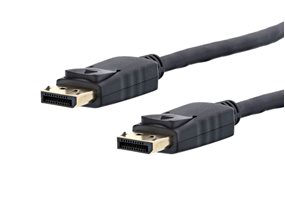
1 Meter (3.28 FT) DisplayPort Cable
DisplayPort defines a digital audio/video interconnect, intended to be used primarily between a computer and a display monitor, or a home-theater system. DisplayPort currently supports a maximum of 17.28 Gbit/s data rate over a 1 meter cable.
$4.97
In stock

Vivid AV
1 Meter (3.28 FT) HDMI to DVI-D Cable
Vivid AV® 1 Meter HDMI to DVI-D Cable offers the highest quality digital picture and is completely HDCP compliant.
$3.95
In stock

Vivid AV
1 Meter (3.28 FT) High Speed HDMI to Micro HDMI D Cable with Ethernet
HDMI (High-Definition Multimedia Interface) offers a super fast link between two High Definition devices while saving space by combining Audio and Video into a single cable.
$3.26
In stock

Vivid AV
1.5 FT High Speed HDMI to Mini HDMI C Cable with Ethernet
HDMI (High-Definition Multimedia Interface) offers a super fast link between two High Definition devices while saving space by combining Audio and Video into a single cable.
$3.68
Calrad
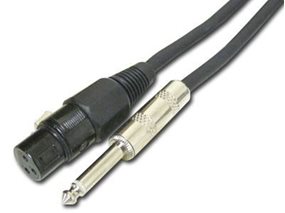
10 FT - MIG High Quality Male 1/4" Mono to Female XLR
10FT - MIG High Quality Male 1/4" Mono to Female XLR is designed for most audio applications, Calrad's new MIG (mic, instrument & guitar) cable is constructed with 95% OFC braided copper with 22 Gauge center conductors.
$13.30
In stock
Calrad
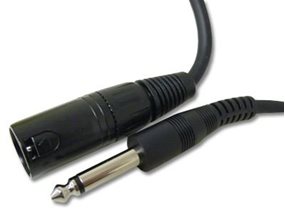
10 FT Audio Cable - Male XLR to 1/4 inch Mono Plug
10FT Audio Cable - Male XLR to 1/4 inch Mono Plug from Computer Cable Store. These Microphone Cables are great for many different applications like making a speech in school or for adding a little karaoke to your home stereo. These cables are Black PVC jacketed cable and shielded.
$7.37
In stock

Vivid AV
10 FT High Speed HDMI to Mini HDMI C Cable with Ethernet
HDMI (High-Definition Multimedia Interface) offers a super fast link between two High Definition devices while saving space by combining Audio and Video into a single cable.
$6.07
Vivid AV
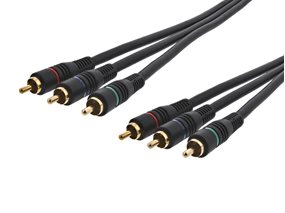
12 FT Component Video Cable (RGB)
Vivid AV® Component Video cables are the ideal way to connect your High Definition DVD player to your High Definition TV, bypassing the TV's color decoder to provide the best image quality and clarity possible.
$6.81
In stock
Vivid AV
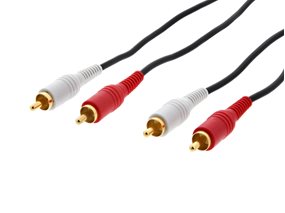
12 FT Gold RCA Audio Cable - Stereo
RCA Stereo Audio cables from Vivid AV® are excellent for connecting your Stereo, DVD, HD-TV, and all other home theater audio involved equipment.
$3.45
In stock

Vivid AV
12 FT Shielded RCA Extension Cable - M/F
Vivid AV® high performance RCA type Extension cables are excellent for extending RCA connections between audio/video devices. These RCA Plug to Jack cables are shielded to prevent unwanted noise and distortion.
$3.45

Vivid AV
12 FT Stereo AUX Cable - 3.5mm Stereo M/M
Our 12 FT Stereo AUX Cable - 3.5mm Stereo M/M cables provide a quality connection for your PC's sound card or portable CD player to a set of multimedia speakers.
$3.71
In stock

Vivid AV
12 FT Stereo AUX Extension Cable - 3.5mm Stereo M/F
Our 12 FT Stereo AUX Extension Cable - 3.5mm Stereo M/F cables provide a quality connection for your PC's sound card or portable CD player to a set of multimedia speakers.
$3.71
In stock
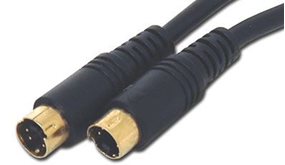
12 FT S-Video (S-VHS) Cable - MiniDin4 M/M
Provide your Television with sharper images using Computer Cable Store high performance 12 FT S-Video (S-VHS) Cable - MiniDin4 M/M. S-Video is able to surpass composite video quality in that it sends signals to the TV in the same format that the TV processes them.
$4.60